

The 40-60-80 Rule Explained: Stay Eligible, Keep Earning With NIL Club
9 min read
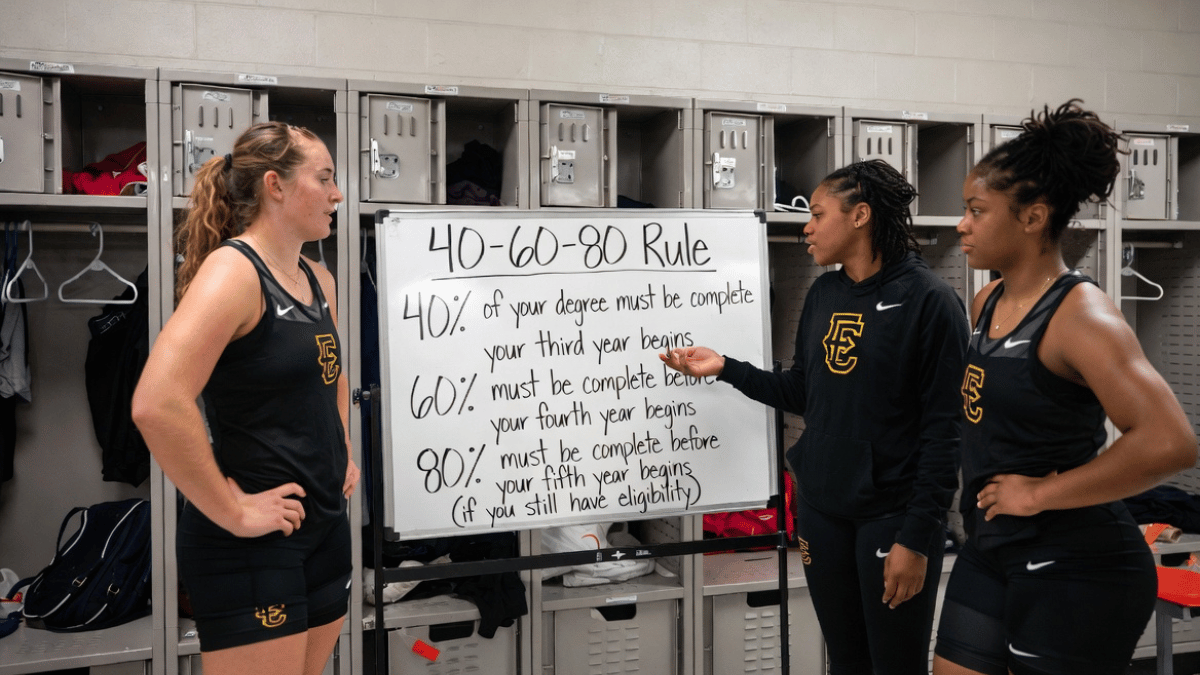
Balancing college athletics with academics is demanding. Practices often run for hours, travel can take up entire days, and games frequently fill weekends. All the while, your academic progress continues on its own schedule.
No matter how well you perform on the field, your academic requirements remain unchanged.
In Division I, the NCAA enforces a progress-toward-degree standard that often surprises athletes. Known as the 40-60-80 Rule, it appears straightforward at first glance, but the impact on eligibility can be significant if you miss the details.
Falling behind academically can cost you eligibility, regardless of your athletic performance or NIL earnings. For this reason, having a clear academic plan is essential. When athletes avoid off-the-field issues, they’re also helping brands and fans; consistency leads to stronger partnerships and better storytelling.
We built NIL Club for student-athletes who want to earn without losing control of what matters most: finishing school.
No matter how well you perform on the field, your academic requirements remain unchanged.
In Division I, the NCAA enforces a progress-toward-degree standard that often surprises athletes. Known as the 40-60-80 Rule, it appears straightforward at first glance, but the impact on eligibility can be significant if you miss the details.
Falling behind academically can cost you eligibility, regardless of your athletic performance or NIL earnings. For this reason, having a clear academic plan is essential. When athletes avoid off-the-field issues, they’re also helping brands and fans; consistency leads to stronger partnerships and better storytelling.
We built NIL Club for student-athletes who want to earn without losing control of what matters most: finishing school.
What the 40-60-80 Rule actually means
The 40-60-80 Rule is part of progress toward a degree for Division I. It measures how quickly you progress through your degree.
Here is the plain version:
The NCAA only counts credits that apply directly to your declared major or program. Elective or unrelated credits do not help you meet progress-toward-degree standards.
This distinction is important. You can pass several classes and still fall behind if those courses do not align with your degree plan.
Here is the plain version:
- 40% of your degree must be complete before your third year begins.
- 60% must be complete before your fourth year begins.
- 80% must be complete before your fifth year begins (if you still have eligibility).
The NCAA only counts credits that apply directly to your declared major or program. Elective or unrelated credits do not help you meet progress-toward-degree standards.
This distinction is important. You can pass several classes and still fall behind if those courses do not align with your degree plan.
The other rules that usually come with it
Eligibility issues rarely result from a single major error. More often, small oversights accumulate over time and create bigger problems.
These standards commonly show up alongside the 40-60-80 checkpoints in Division I:
Your compliance office and academic advisors can confirm the specific requirements for your sport and institution. Still, the core principle remains the same: the NCAA expects steady, ongoing progress toward your degree, not a rush to catch up at the end.
These standards commonly show up alongside the 40-60-80 checkpoints in Division I:
- Six credits each term to stay eligible for the next term.
- 24 semester hours each academic year (with limits on how many can come from summer).
- Full-time enrollment (typically 12 credits during the term, depending on school rules).
- Minimum GPA progress that often rises over time and ties back to the school's graduation GPA standard.
Your compliance office and academic advisors can confirm the specific requirements for your sport and institution. Still, the core principle remains the same: the NCAA expects steady, ongoing progress toward your degree, not a rush to catch up at the end.
Why this matters more now
While NIL opportunities have changed how athletes can earn money, the academic eligibility rules remain unchanged.
Many athletes feel increased pressure to take on more responsibilities once NIL becomes part of their lives. That can mean more content creation, additional partnerships, frequent posts, extra meetings, and new merchandise opportunities.
All of this extra activity can take time away from tutoring, office hours, and meetings with academic advisors. Meanwhile, your athletic commitments remain just as demanding.
So the real question becomes simple:
How do you earn without drifting off your degree path?
Athletes who answer that well usually do three things:
Many athletes feel increased pressure to take on more responsibilities once NIL becomes part of their lives. That can mean more content creation, additional partnerships, frequent posts, extra meetings, and new merchandise opportunities.
All of this extra activity can take time away from tutoring, office hours, and meetings with academic advisors. Meanwhile, your athletic commitments remain just as demanding.
So the real question becomes simple:
How do you earn without drifting off your degree path?
Athletes who answer that well usually do three things:
- They protect study time like it is training time.
- They choose NIL options that fit their schedule.
- They avoid income streams that demand constant output.
The most common ways athletes fall behind
Too many credits that do not count
It is common for athletes to pass a class and later discover it does not count toward their degree requirements. This surprise often comes from not checking whether a course fits the degree plan. If a class does not apply to your program, it will not help you meet the 40-60-80 benchmarks.Waiting too long to declare a major
Most schools set a deadline for declaring your major. Even if your school offers some flexibility, the progress-toward-degree rules usually become stricter after you reach the 40% mark. Delaying your decision can make it much harder to create a straightforward academic plan.Losing summer without a plan
Summer courses can be valuable, but only when they fit into a larger academic plan. Athletes who enroll in random summer classes often find those credits do not address their actual degree requirements.Letting NIL become a second job
Certain NIL opportunities offer strong financial rewards but require ongoing effort and frequent deliverables. While this may seem manageable at first, it often becomes overwhelming during midterms, finals, or periods of intense travel.How NIL Club helps you earn without blowing up your schedule
Athletes benefit most from opportunities that fit the realities of their schedules, not from added chaos.
NIL Club is designed to support academic progress in two practical ways: by reducing the time commitment required and by offering predictable, manageable earning opportunities.
NIL Club takes a different approach. Teams and groups earn collectively through a subscription model that is easy for fans to support. This structure lowers the individual workload and ensures that promotion remains consistent and shared among teammates.
With less administrative work, athletes have more time to focus on the activities that truly support eligibility, such as attending classes, setting aside study periods, and meeting with advisors.
Athletes can simply share a link, post updates occasionally, and then return to their routines. This steady approach helps maintain academic progress and reduces stress during busy semesters.
Consistent income can also lower stress. When you are not worried about essentials like books, rent, or meals, it becomes easier to make sound academic choices.
NIL Club is designed to support academic progress in two practical ways: by reducing the time commitment required and by offering predictable, manageable earning opportunities.
1) Low time commitment earning that works with team life
Traditional one-off deals often require an athlete to manage everything alone. That includes content planning, approvals, posting schedules, and follow-up.NIL Club takes a different approach. Teams and groups earn collectively through a subscription model that is easy for fans to support. This structure lowers the individual workload and ensures that promotion remains consistent and shared among teammates.
With less administrative work, athletes have more time to focus on the activities that truly support eligibility, such as attending classes, setting aside study periods, and meeting with advisors.
2) AthleteMerch that fits real schedules
Merchandise sales are often a good fit for athletes because they do not require daily content creation or ongoing negotiations. An online store can continue to generate income while you focus on practice, travel, and academics.Athletes can simply share a link, post updates occasionally, and then return to their routines. This steady approach helps maintain academic progress and reduces stress during busy semesters.
Consistent income can also lower stress. When you are not worried about essentials like books, rent, or meals, it becomes easier to make sound academic choices.
A simple “stay eligible” plan you can actually follow
A complicated system is not necessary. What matters most is building consistent habits that keep you on track.
Step 1: Treat credits like reps
At the start of each term, confirm two things:- Your classes count toward your degree.
- Your credit load keeps you on pace for the year.
Step 2: Meet your advisor early, not late
Set up a meeting with your advisor within the first three weeks of the term. Early check-ins give you time to adjust your schedule if anything is out of place.Step 3: Pick NIL opportunities that match your season
During your competitive season, focus on low-maintenance earning opportunities. In the off-season, you can consider larger campaigns or more involved projects if your schedule allows.Step 4: Build a “finals week rule”
Finals week should be as distraction-free as possible. Set clear boundaries in advance. If an NIL deal requires extra work during finals, try to adjust the schedule or consider turning it down.What brands should understand
Brands achieve better results when athletes maintain stability in their academic and athletic commitments.
When eligibility problems arise, athletes may miss deadlines, rush their content, or make last-minute changes. In contrast, athletes who feel organized are more likely to meet expectations, communicate effectively, and produce higher-quality work.
Brands should do three things:
When eligibility problems arise, athletes may miss deadlines, rush their content, or make last-minute changes. In contrast, athletes who feel organized are more likely to meet expectations, communicate effectively, and produce higher-quality work.
Brands should do three things:
- Keep deliverables realistic during peak travel and exam windows.
- Avoid scripts that force athletes to make claims they cannot support.
- Respect disclosure and compliance as part of quality, not red tape.
What fans should know
Fans often want to support athletes without making their lives harder.
The most effective support systems help athletes stay focused on their academics and maintain eligibility. Subscriptions and merchandise sales offer steady support without requiring ongoing attention from the athlete.
When fans choose support options that align with the realities of team life, they make it easier for athletes to remain in school and continue competing.
The most effective support systems help athletes stay focused on their academics and maintain eligibility. Subscriptions and merchandise sales offer steady support without requiring ongoing attention from the athlete.
When fans choose support options that align with the realities of team life, they make it easier for athletes to remain in school and continue competing.
Want endorsement opportunities that do not compete with school?
Athletes are most successful when they maintain consistency. A well-structured schedule supports that consistency, and steady academic progress helps protect your ability to keep earning.
If your goal is to build NIL income while staying on track academically, begin with a system designed specifically for student-athletes.
If your goal is to build NIL income while staying on track academically, begin with a system designed specifically for student-athletes.
How to Get Started
Student-athletes already juggle many responsibilities. If you are interested in joining, you can claim your team's NIL Club at nilclub.com.
Fans subscribe for exclusive access. Athletes earn together. Compliance is built in.
NIL opportunities should add to your college experience, not create new obstacles. This principle shaped the way we built NIL Club and continues to guide our approach today.
Fans subscribe for exclusive access. Athletes earn together. Compliance is built in.
NIL opportunities should add to your college experience, not create new obstacles. This principle shaped the way we built NIL Club and continues to guide our approach today.