

Top 10 NIL Revenue Streams for College Athletes in 2026
13 min read
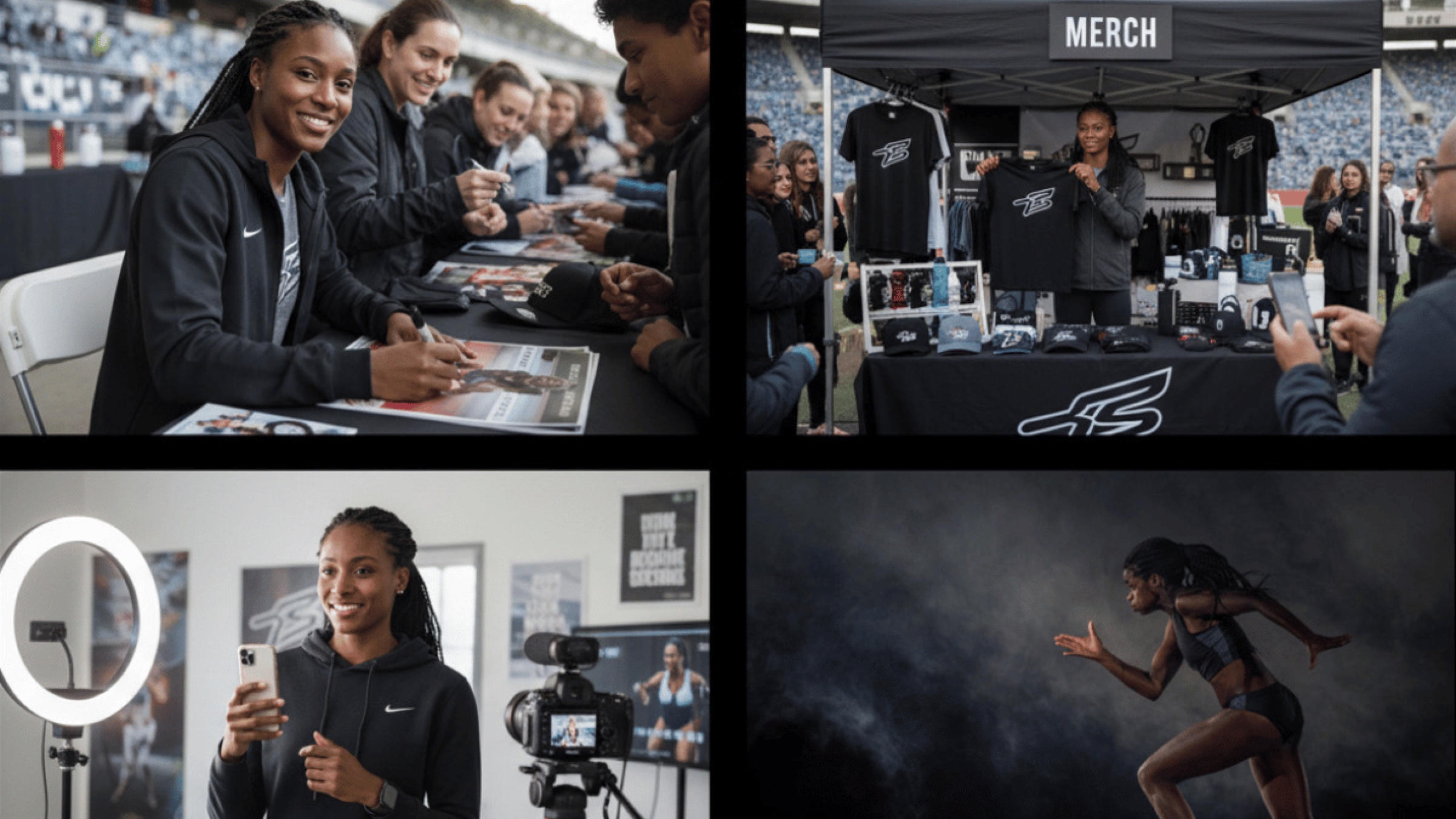
Here's something we've noticed after working with hundreds of thousands of college athletes. Most of them come into NIL thinking about one thing: the brand deal. A company reaches out, you post something, they pay you, and that's NIL. That's how it gets talked about, anyway.
But brand deals are only part of the picture. For many athletes, they can be frustrating because they are not always consistent. You might have two deals one month and none the next. When you are balancing practices, games, classes, travel, and everything else that comes with being a student-athlete, constantly searching for the next opportunity can quickly become exhausting.
What actually works, based on what we've seen across more than 650,000 athletes on our platform, is a mix. Different streams are doing different jobs. Some that pay well when they come together. Others that just keep quietly running in the background, month after month. The athletes who build real NIL income understand the difference.
So here are the 10 streams worth knowing about, how they actually work, and which ones we'd put our energy into first.
But brand deals are only part of the picture. For many athletes, they can be frustrating because they are not always consistent. You might have two deals one month and none the next. When you are balancing practices, games, classes, travel, and everything else that comes with being a student-athlete, constantly searching for the next opportunity can quickly become exhausting.
What actually works, based on what we've seen across more than 650,000 athletes on our platform, is a mix. Different streams are doing different jobs. Some that pay well when they come together. Others that just keep quietly running in the background, month after month. The athletes who build real NIL income understand the difference.
So here are the 10 streams worth knowing about, how they actually work, and which ones we'd put our energy into first.
Fan Subscriptions: The One Most Athletes Underestimate
We built NIL Club around subscriptions because we genuinely believe this is the most powerful income model available to college athletes right now. Not the flashiest. Not the one that gets press coverage. But the most reliable, and for most athletes, the most sustainable.
The way it works is simple. Your team sets up a community page. Fans pay a monthly subscription to get exclusive content directly from you and your teammates. Revenue splits equally across the whole team, every month, without anyone outside the team making decisions about who earns what. No donors. No boosters. No university officials with approval authority over your own income. The platform is entirely student-run.
What makes subscriptions different from everything else on this list is that the income is renewed. A fan who subscribes this month doesn't need to be resold next month. They're already in. That creates a financial foundation that brand deals, appearances, and one-off campaigns simply can't match, because those all require you to start the process over each time.
We've seen this matter most for athletes in non-revenue sports. A swimmer or a wrestler or a women's lacrosse player isn't going to get a call from a national shoe brand. But they do have fans. Former teammates, family members, local supporters, and alumni have followed the program for years. Those people want a direct way to support the athletes they care about. Subscriptions give them that, and they give athletes a real income stream that doesn't depend on sport visibility or social media follower counts.
For football and basketball players, subscriptions work differently but just as well. They become the base layer, the income that runs reliably, while bigger brand deals get pursued on top of it.
The way it works is simple. Your team sets up a community page. Fans pay a monthly subscription to get exclusive content directly from you and your teammates. Revenue splits equally across the whole team, every month, without anyone outside the team making decisions about who earns what. No donors. No boosters. No university officials with approval authority over your own income. The platform is entirely student-run.
What makes subscriptions different from everything else on this list is that the income is renewed. A fan who subscribes this month doesn't need to be resold next month. They're already in. That creates a financial foundation that brand deals, appearances, and one-off campaigns simply can't match, because those all require you to start the process over each time.
We've seen this matter most for athletes in non-revenue sports. A swimmer or a wrestler or a women's lacrosse player isn't going to get a call from a national shoe brand. But they do have fans. Former teammates, family members, local supporters, and alumni have followed the program for years. Those people want a direct way to support the athletes they care about. Subscriptions give them that, and they give athletes a real income stream that doesn't depend on sport visibility or social media follower counts.
For football and basketball players, subscriptions work differently but just as well. They become the base layer, the income that runs reliably, while bigger brand deals get pursued on top of it.
Brand Deals: High Upside, but Know How They Actually Work
Brand deals are what most people picture when they think about NIL, and they can absolutely pay well. A local restaurant might pay a few hundred dollars for a post. A national brand running a full campaign with multiple deliverables, usage rights, and a content schedule can pay significantly more.
The range depends on a few things: your follower count, your engagement rate, your sport, and how closely your audience matches what the brand is actually trying to reach. Those factors matter more than most athletes realize going in.
One thing we hear constantly from athletes at smaller programs or in lower-visibility sports: national brands don't come to them. That's real. It's also one of the reasons we built the brand deals feature inside NIL Club the way we did. When a brand runs a team campaign through our platform, athletes who wouldn't attract that brand individually get access to the deal as part of the group. It changes the math for a lot of athletes who assumed brand deals weren't really available to them.
If you're learning how to approach sponsorships for the first time, our step-by-step guide to getting NIL sponsorship is worth reading before you start reaching out to anyone.
One practical thing that often gets skipped: every deal above $600 needs to be reported through NIL Go within five business days. Get the written agreement, confirm the deliverables, and know the deadline for reporting. This stuff isn't complicated, but it's the part athletes occasionally get sloppy about when things move quickly.
The range depends on a few things: your follower count, your engagement rate, your sport, and how closely your audience matches what the brand is actually trying to reach. Those factors matter more than most athletes realize going in.
One thing we hear constantly from athletes at smaller programs or in lower-visibility sports: national brands don't come to them. That's real. It's also one of the reasons we built the brand deals feature inside NIL Club the way we did. When a brand runs a team campaign through our platform, athletes who wouldn't attract that brand individually get access to the deal as part of the group. It changes the math for a lot of athletes who assumed brand deals weren't really available to them.
If you're learning how to approach sponsorships for the first time, our step-by-step guide to getting NIL sponsorship is worth reading before you start reaching out to anyone.
One practical thing that often gets skipped: every deal above $600 needs to be reported through NIL Go within five business days. Get the written agreement, confirm the deliverables, and know the deadline for reporting. This stuff isn't complicated, but it's the part athletes occasionally get sloppy about when things move quickly.
Merchandise: Slower to Build, but It Keeps Going
Merch is interesting because it works very differently from a brand deal or a subscription. It's a physical product connected to your name, sitting in a fan's closet or on their shelf long after the transaction happened. That kind of visibility doesn't expire.
The challenge is that merch sales tend to follow community size, not precede it. Athletes who launch merchandise before they've built a real fan relationship usually see weak results. Athletes who launch after they've already built that connection through consistent content and engagement see something different. Their fans actually want something tangible to show their support.
AthleteMerch.com is the platform we point athletes to for this. There's no inventory to manage, no upfront production costs, no logistics to figure out during exam week. Athletes build the products, the platform handles the rest, and earnings come from each sale.
The athletes who do this well promote their merch the same way they promote everything else related to their NIL. They do this consistently through the same channels where their community already lives.
The challenge is that merch sales tend to follow community size, not precede it. Athletes who launch merchandise before they've built a real fan relationship usually see weak results. Athletes who launch after they've already built that connection through consistent content and engagement see something different. Their fans actually want something tangible to show their support.
AthleteMerch.com is the platform we point athletes to for this. There's no inventory to manage, no upfront production costs, no logistics to figure out during exam week. Athletes build the products, the platform handles the rest, and earnings come from each sale.
The athletes who do this well promote their merch the same way they promote everything else related to their NIL. They do this consistently through the same channels where their community already lives.
Social Media as a Revenue Stream (Not Just a Tool for Getting Other Deals)
Most guides treat social media as background infrastructure for NIL. Grow your following so you can get brand deals. Post more so you can attract sponsors. That's all true, but it undersells what social media income actually is on its own.
TikTok, Instagram, and YouTube all pay creators. The payouts are based on views and engagement, and they grow with your audience. They're not life-changing at smaller follower counts, but they're real, and they stack alongside everything else you're earning.
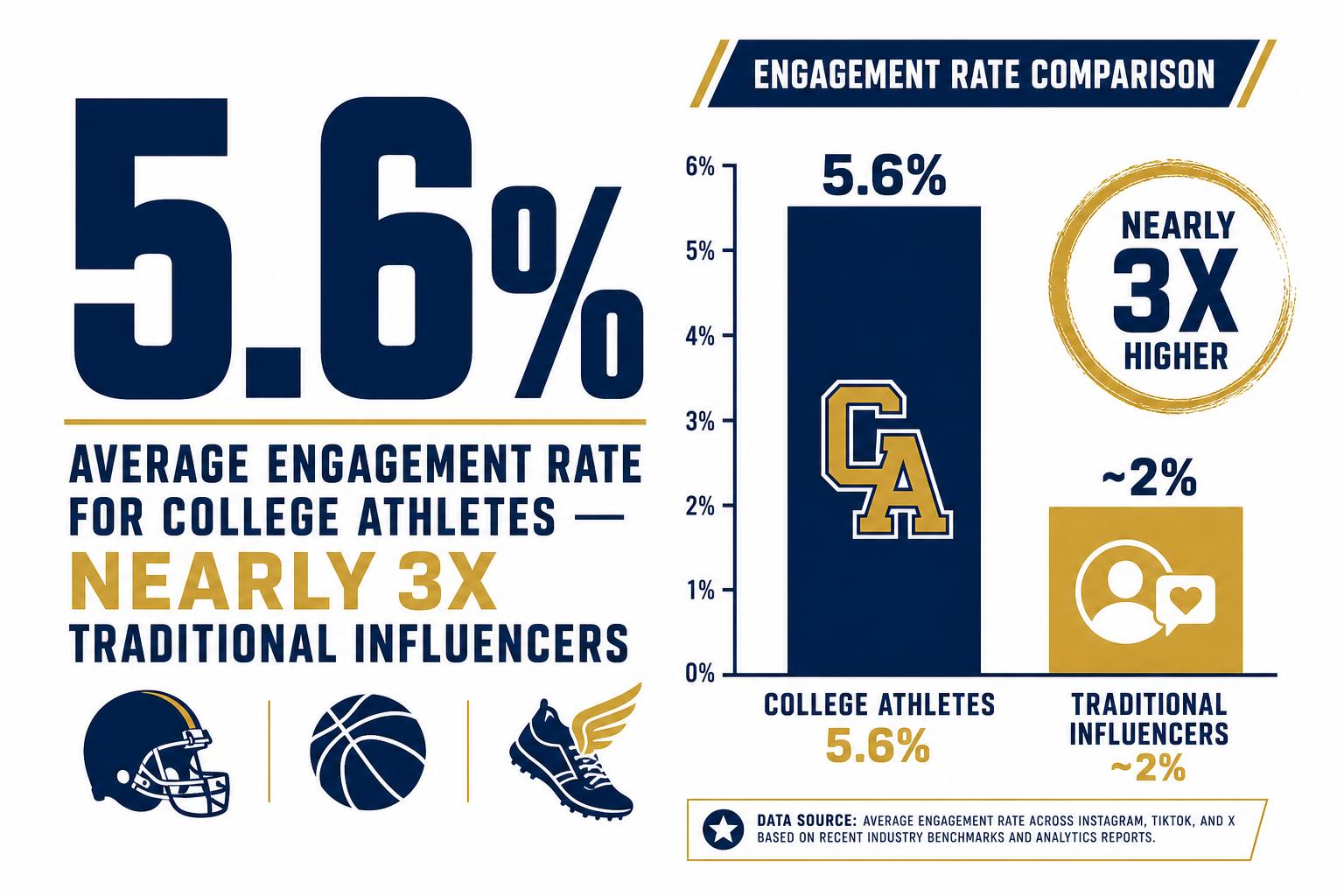
More importantly, college athletes consistently outperform traditional influencers in engagement. The average college athlete gets about a 5.6% engagement rate on content, which is roughly three times what most influencers deliver. Brands have noticed this, which is why sponsored content deals specifically targeting athletes have grown significantly in the last two years.
The longer-term case for investing in your social presence is straightforward. A bigger, more engaged audience makes your brand deals worth more, your merch sell better, and your NIL Club page attract more subscribers. It compounds. Our guide on growing your social media as a college athlete goes into the specifics of how to actually build that following rather than just waiting for it to happen.
TikTok, Instagram, and YouTube all pay creators. The payouts are based on views and engagement, and they grow with your audience. They're not life-changing at smaller follower counts, but they're real, and they stack alongside everything else you're earning.
More importantly, college athletes consistently outperform traditional influencers in engagement. The average college athlete gets about a 5.6% engagement rate on content, which is roughly three times what most influencers deliver. Brands have noticed this, which is why sponsored content deals specifically targeting athletes have grown significantly in the last two years.
The longer-term case for investing in your social presence is straightforward. A bigger, more engaged audience makes your brand deals worth more, your merch sell better, and your NIL Club page attract more subscribers. It compounds. Our guide on growing your social media as a college athlete goes into the specifics of how to actually build that following rather than just waiting for it to happen.
Appearances, Signings, and Cameo
Personal appearances and autograph signings have been part of professional athlete income forever. NIL made them available to college athletes starting in 2021, and they've been a consistent income source for athletes who have local or regional fan recognition.
Athletes can charge for signed merchandise, show up at fan events, appear at local business promotions, or use platforms like Cameo to record personalized videos for fans at a set price. Cameo in particular is worth knowing about because the overhead is essentially zero. You record from your phone.
These opportunities work best when you already have fans who want access to you. For athletes with large national followings, there's real money here. For athletes with strong local recognition, it's more modest but still consistent, especially around game weeks, alumni events, and signing days when fan energy is already high.
Athletes can charge for signed merchandise, show up at fan events, appear at local business promotions, or use platforms like Cameo to record personalized videos for fans at a set price. Cameo in particular is worth knowing about because the overhead is essentially zero. You record from your phone.
These opportunities work best when you already have fans who want access to you. For athletes with large national followings, there's real money here. For athletes with strong local recognition, it's more modest but still consistent, especially around game weeks, alumni events, and signing days when fan energy is already high.
Local Business Partnerships
Don't underestimate this one, especially if you play at a mid-major program or a school that isn't a consistent ESPN fixture.
Local businesses, a car dealership, a gym, a restaurant group, a bank, genuinely want to be associated with recognizable athletes in their own market. Their budgets don't touch what a national brand spends, but the deals are often simpler to put together and to fulfill. A few social posts, an advertising appearance, a face at an event.
There's also a longer arc to local partnerships that doesn't show up in the immediate payment. Athletes who build relationships with local businesses during their playing days often find those same relationships useful years later, when they're starting careers in the same city. It's a version of networking that also pays you now.
Local businesses, a car dealership, a gym, a restaurant group, a bank, genuinely want to be associated with recognizable athletes in their own market. Their budgets don't touch what a national brand spends, but the deals are often simpler to put together and to fulfill. A few social posts, an advertising appearance, a face at an event.
There's also a longer arc to local partnerships that doesn't show up in the immediate payment. Athletes who build relationships with local businesses during their playing days often find those same relationships useful years later, when they're starting careers in the same city. It's a version of networking that also pays you now.
Camps and Clinics
Running or appearing at a youth sports camp or clinic is one of the most natural NIL opportunities for a college athlete. You already have the skills. You already have the credibility. And younger athletes, especially at the high school and club level, will pay for direct access to someone currently playing the sport they're trying to get better at.
Athletes can partner with existing camps as a guest or organize something smaller with support from their athletic department or a local facility. Beyond the income itself, clinics tend to build exactly the kind of local fan relationships that support every other stream on this list. The parent who brings their kid to your clinic is much more likely to become a subscriber on your NIL Club page.
Athletes can partner with existing camps as a guest or organize something smaller with support from their athletic department or a local facility. Beyond the income itself, clinics tend to build exactly the kind of local fan relationships that support every other stream on this list. The parent who brings their kid to your clinic is much more likely to become a subscriber on your NIL Club page.
Group Licensing and Video Games
EA Sports bringing back NCAA College Football 25 in 2024 was the biggest moment for group licensing in college sports history. Athletes who opted in got paid for their likeness appearing in the game. No individual negotiation required, no agent, just an opt-in decision.
Group licensing works the same way across other categories. A third-party company manages the agreement, athletes join as a group, and compensation comes through based on the terms. Merchandise licensing, where your name or number appears on officially sold products, follows a similar structure.
Per-athlete payments here are smaller than a solo deal. And you don't have much control over the terms. But the effort involved after you opt in is close to nothing, which makes it an easy addition to everything else you're already doing.
Group licensing works the same way across other categories. A third-party company manages the agreement, athletes join as a group, and compensation comes through based on the terms. Merchandise licensing, where your name or number appears on officially sold products, follows a similar structure.
Per-athlete payments here are smaller than a solo deal. And you don't have much control over the terms. But the effort involved after you opt in is close to nothing, which makes it an easy addition to everything else you're already doing.
Long-Form Content: Takes Time, but the Payoff Is Different
Podcasting and YouTube are worth including on this list honestly, which means saying this upfront: they take longer to monetize than any other stream here. If you're looking for income this semester, this probably isn't where to focus your energy first.
But for athletes willing to build something over time, long-form content creates a relationship with an audience that nothing else quite replicates. Fans who listen to your podcast regularly or follow your YouTube channel know you at a different level than followers who scroll past your Instagram posts. That depth converts into better subscriber retention on NIL Club, stronger merchandise sales, and better brand deal terms over time. It also outlasts your playing career, which is a genuine advantage when you think about what NIL is actually building toward.
If building your presence across multiple platforms is something you're thinking about longer term, our guide on athlete personal brand development is worth your time.
But for athletes willing to build something over time, long-form content creates a relationship with an audience that nothing else quite replicates. Fans who listen to your podcast regularly or follow your YouTube channel know you at a different level than followers who scroll past your Instagram posts. That depth converts into better subscriber retention on NIL Club, stronger merchandise sales, and better brand deal terms over time. It also outlasts your playing career, which is a genuine advantage when you think about what NIL is actually building toward.
If building your presence across multiple platforms is something you're thinking about longer term, our guide on athlete personal brand development is worth your time.
School Revenue Sharing
This one is new enough that it's worth explaining clearly.
Under the House v. NCAA settlement, which took effect July 1, 2025, Division I schools can now distribute a portion of their athletics revenue directly to athletes. The cap for 2025-26 is approximately $20.5 million per school, growing 4% annually through 2035. For a full breakdown of how this interacts with NIL, see our revenue sharing vs. NIL guide.
Here's the honest version of what this means for most athletes. If you play football or men's basketball at a Power Four school, revenue sharing could be significant. If you play anything else, it might be modest or nothing at all, because schools control the allocation entirely and most are directing the bulk of funds toward their biggest revenue sports.
Revenue sharing is also the only income stream on this list where you have no leverage. You don't negotiate for it. You don't apply. Your school decides, and you find out what you're getting. That's why we put it last. It's worth knowing about and worth including in your financial picture, but it's not a strategy. It's a variable you can't control.
Under the House v. NCAA settlement, which took effect July 1, 2025, Division I schools can now distribute a portion of their athletics revenue directly to athletes. The cap for 2025-26 is approximately $20.5 million per school, growing 4% annually through 2035. For a full breakdown of how this interacts with NIL, see our revenue sharing vs. NIL guide.
Here's the honest version of what this means for most athletes. If you play football or men's basketball at a Power Four school, revenue sharing could be significant. If you play anything else, it might be modest or nothing at all, because schools control the allocation entirely and most are directing the bulk of funds toward their biggest revenue sports.
Revenue sharing is also the only income stream on this list where you have no leverage. You don't negotiate for it. You don't apply. Your school decides, and you find out what you're getting. That's why we put it last. It's worth knowing about and worth including in your financial picture, but it's not a strategy. It's a variable you can't control.
Putting It Together
The athletes who build the most meaningful NIL income aren't the ones who got one big deal. They're the ones who built a mix that works even during slow stretches, even during the season, and even in sports that don't get national television coverage.
Start with what you can control. Get your NIL Club page set up for recurring income, work toward brand deals through the platform, and build your merchandise presence as your community grows. Everything else on this list adds on top of that foundation as your audience and reputation develop.
If you're a fan, joining an athlete's NIL Club page is the most direct way to support them. The income goes straight to the team.
If you're a brand, NIL Club connects you to more than 650,000 student-athletes across 2,000-plus schools for team-based campaigns that reach audiences at a scale individual deals can't match. See how brand partnerships work.
Start with what you can control. Get your NIL Club page set up for recurring income, work toward brand deals through the platform, and build your merchandise presence as your community grows. Everything else on this list adds on top of that foundation as your audience and reputation develop.
If you're a fan, joining an athlete's NIL Club page is the most direct way to support them. The income goes straight to the team.
If you're a brand, NIL Club connects you to more than 650,000 student-athletes across 2,000-plus schools for team-based campaigns that reach audiences at a scale individual deals can't match. See how brand partnerships work.